
A New Era for Fatty Liver Treatment
For many years, people diagnosed with fatty liver disease were often told the same thing: lose weight, improve your diet, exercise more, manage diabetes, and monitor your liver.
That advice is still important. But in 2024, the treatment landscape changed.
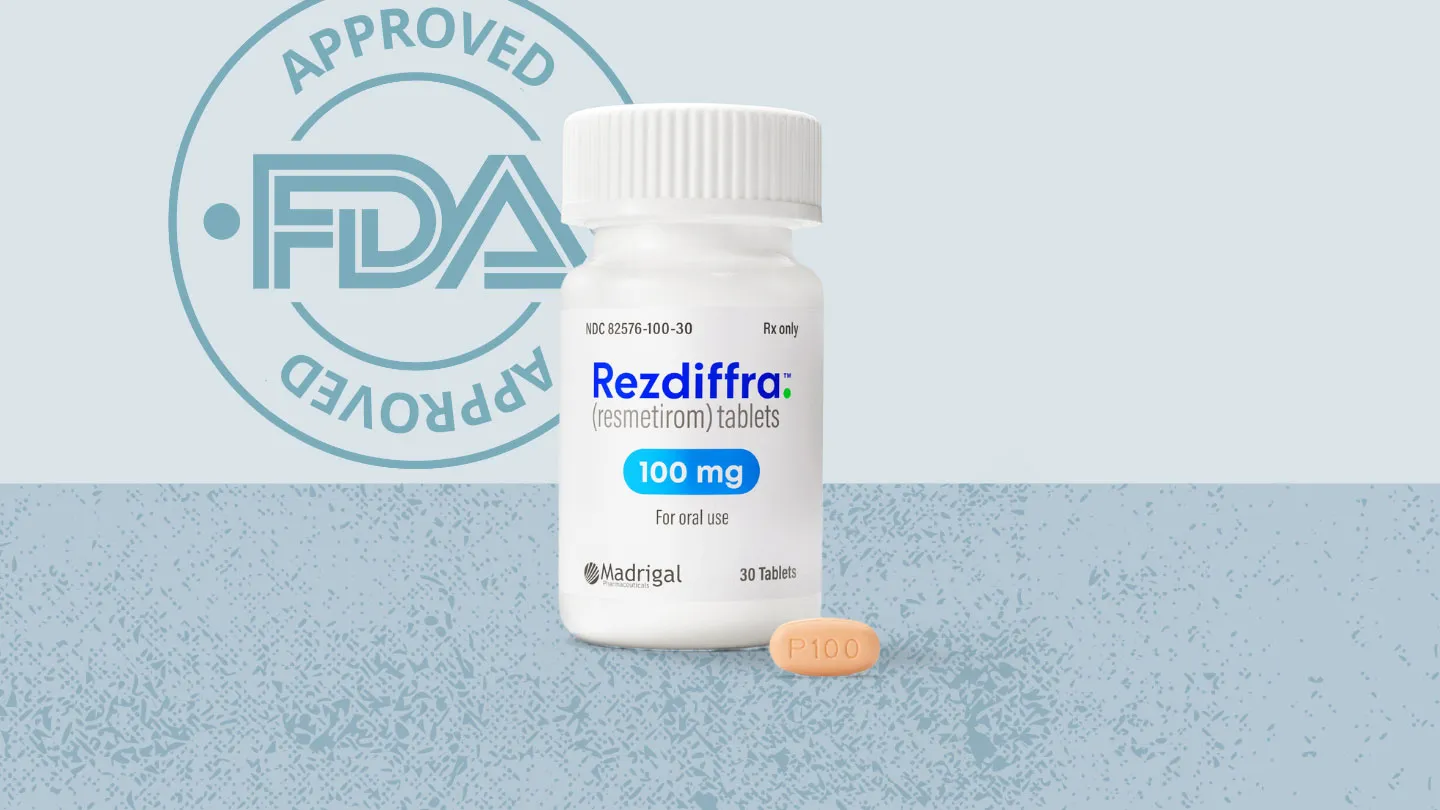
The U.S. Food and Drug Administration approved Rezdiffra, also known by its generic name resmetirom, for adults with noncirrhotic non-alcoholic steatohepatitis, or NASH, with moderate to advanced liver fibrosis, to be used together with diet and exercise. This was the first FDA-approved medication for patients with this form of fatty liver disease and liver scarring.
Today, NASH is increasingly called MASH, which stands for metabolic dysfunction-associated steatohepatitis. The broader condition formerly called NAFLD is now called MASLD, or metabolic dysfunction-associated steatotic liver disease. AASLD explains that NAFLD is now MASLD, and NASH is now MASH.
So when patients search for “Rezdiffra for fatty liver,” the accurate answer is:
Rezdiffra is not for every person with fatty liver. It is for adults with the more serious inflammatory form, NASH/MASH, who also have moderate to advanced fibrosis but do not have cirrhosis.
What Is Rezdiffra?
Rezdiffra is the brand name for resmetirom, an oral prescription medicine taken as a tablet.
It belongs to a class of drugs called thyroid hormone receptor-beta agonists, often shortened to THR-beta agonists. According to the FDA-approved prescribing information, Rezdiffra is indicated along with diet and exercise for adults with noncirrhotic NASH with moderate to advanced liver fibrosis, consistent with F2 to F3 fibrosis.
That wording is important.
It means Rezdiffra is not approved simply because someone has:
- Mild fatty liver on ultrasound
- Elevated ALT or AST alone
- Grade 1 fatty liver
- General liver discomfort
- A desire to “cleanse” the liver
- Simple steatosis without confirmed higher-risk disease
It is intended for a narrower group: people with NASH/MASH plus meaningful liver scarring, but not cirrhosis.
Rezdiffra, NASH and MASH: Clearing Up the Names
Many patients are confused because doctors, websites, lab reports, and drug labels may use different terms.
Here is the simple translation:
| Older term | Newer term | Meaning |
|---|---|---|
| NAFLD | MASLD | Fat buildup in the liver linked to metabolic risk factors |
| NASH | MASH | Fatty liver with inflammation and liver-cell injury |
| Fibrosis | Fibrosis | Liver scarring |
| F2 fibrosis | Moderate fibrosis | Meaningful liver scarring, not yet cirrhosis |
| F3 fibrosis | Advanced fibrosis | Severe scarring before cirrhosis |
| F4 fibrosis | Cirrhosis | Advanced structural liver scarring |
AASLD states that metabolic dysfunction-associated steatohepatitis, or MASH, is the replacement term for NASH. It also explains that MASLD includes patients who have hepatic steatosis and at least one of five cardiometabolic risk factors.
Because Rezdiffra’s FDA label still uses the older term NASH, patients may see both NASH and MASH used for the same disease category.
Who Is Rezdiffra For?
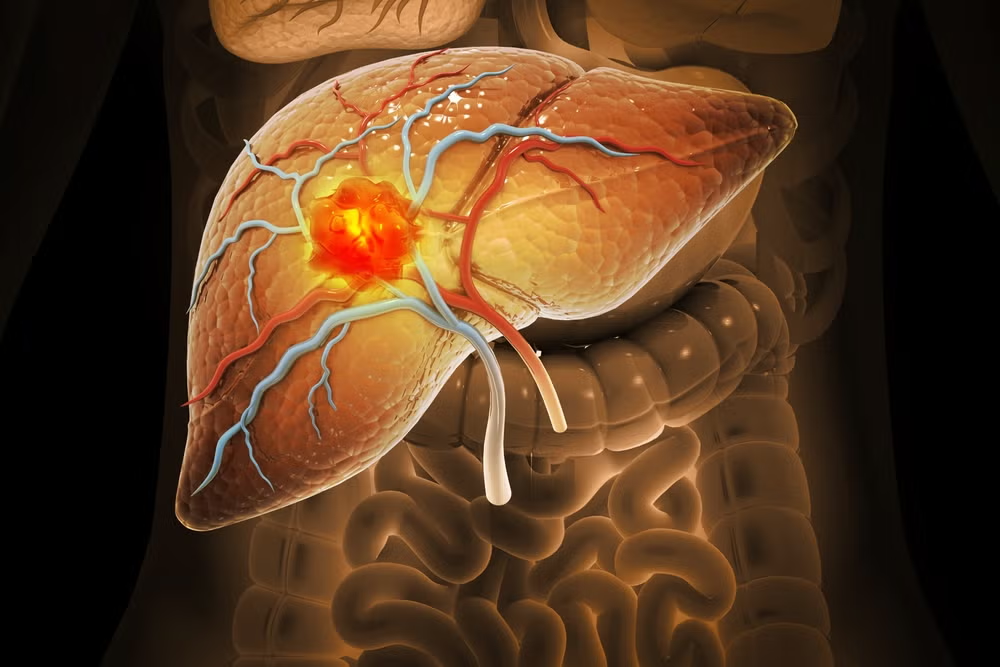
Rezdiffra is for adults with:
- NASH/MASH
- Moderate to advanced liver fibrosis
- No cirrhosis
- Ongoing diet and exercise treatment
The FDA-approved label describes the indication as adults with noncirrhotic NASH with F2 to F3 fibrosis, used together with diet and exercise. The same label says to avoid use in people with decompensated cirrhosis.
The European Medicines Agency gives a similar description, stating that Rezdiffra is used with diet and physical activity in adults with MASH who have stage 2 or stage 3 liver fibrosis.
A practical way to think about it:
| Patient situation | Is Rezdiffra likely relevant? |
|---|---|
| Simple fatty liver on ultrasound | Usually not by itself |
| Mild fatty liver, normal fibrosis risk | Usually not |
| NASH/MASH with F2 fibrosis | Potentially yes |
| NASH/MASH with F3 fibrosis | Potentially yes |
| Cirrhosis | Not the approved target group |
| Decompensated cirrhosis | Avoid use according to label |
| Children under 18 | Safety and effectiveness not established |
The label’s patient information states that Rezdiffra is not known to be safe and effective in children under 18.
How Does Rezdiffra Work?
Rezdiffra activates a liver-focused thyroid hormone receptor called THR-beta.
This does not mean it is a thyroid replacement medicine like levothyroxine. It is designed to act on a receptor involved in liver fat metabolism.
The FDA explains that Rezdiffra is a partial activator of a thyroid hormone receptor, and activation of this receptor in the liver reduces liver fat accumulation.
The EMA describes the mechanism similarly: resmetirom attaches to and activates THR-beta in liver cells, increasing fat breakdown and reducing the amount of fat stored in the liver, which may help reduce inflammation and fibrosis.
This is why Rezdiffra is not just a symptom-control drug. It targets part of the metabolic process involved in MASH.
What Did the Clinical Trial Show?
The FDA approval was based on a 12-month analysis from an ongoing 54-month randomized, double-blind, placebo-controlled trial. The trial included patients with biopsy-confirmed NASH and moderate or advanced liver scarring.
In the FDA’s summary, 888 subjects were assigned to placebo, Rezdiffra 80 mg, or Rezdiffra 100 mg once daily, in addition to standard care that included counseling for healthy diet and exercise.
The trial looked at two important outcomes:
- Resolution of NASH/MASH without worsening of fibrosis
- Improvement in liver fibrosis without worsening of steatohepatitis
At 12 months, a greater proportion of people taking Rezdiffra met these biopsy-based endpoints compared with placebo. The FDA label reports that for resolution of steatohepatitis without worsening fibrosis, response rates were 26–27% for the 80 mg group and 24–36% for the 100 mg group, depending on pathologist reading, compared with 9–13% for placebo.
For improvement in liver fibrosis without worsening steatohepatitis, response rates were 23% for the 80 mg group and 24–28% for the 100 mg group, compared with 13–15% for placebo, depending on pathologist reading.
That is meaningful, but it also shows an important reality: Rezdiffra helped some patients, not all patients.
Why Approval Was “Accelerated”
Rezdiffra was approved under the FDA’s accelerated approval pathway.
That means approval was based on improvement in NASH and fibrosis markers considered reasonably likely to predict clinical benefit, but the sponsor still needs to complete post-approval research to verify and describe long-term clinical benefit.
The FDA states that the sponsor is required to conduct a postapproval study by completing the ongoing 54-month trial.
For patients, this means Rezdiffra is a real approved treatment, but long-term outcome questions still matter:
- Does it reduce progression to cirrhosis?
- Does it reduce liver failure?
- Does it reduce liver-related hospitalization?
- Does it reduce liver cancer risk?
- Which patients respond best?
- How should response be monitored over years?
Those are exactly the kinds of questions longer follow-up studies are meant to answer.
Does Rezdiffra Replace Diet and Exercise?
No.
Rezdiffra is approved in conjunction with diet and exercise, not as a replacement for lifestyle change. The FDA approval language and prescribing information both emphasize use along with diet and exercise.
This is one of the most important patient messages.
Rezdiffra may help treat NASH/MASH with fibrosis, but the underlying metabolic drivers still matter. Blood sugar, triglycerides, body weight, waist circumference, blood pressure, sleep, alcohol exposure, and physical activity can all influence fatty liver risk.
The best mindset is:
Rezdiffra is not a shortcut around lifestyle change. It is a medical tool for selected higher-risk patients, used as part of a broader treatment plan.
How Is Rezdiffra Taken?
Rezdiffra is an oral tablet taken once daily. The FDA label says the recommended dosage is based on actual body weight: 80 mg once daily for patients weighing less than 100 kg and 100 mg once daily for patients weighing 100 kg or more. The label also says it can be taken with or without food.
This is not a dosing recommendation for any individual reader. The exact decision belongs to the prescribing clinician, especially because drug interactions and liver status can affect safe use.
What Are the Common Side Effects?
The most common side effects listed in the FDA label include:
- Diarrhea
- Nausea
- Itching, also called pruritus
- Vomiting
- Constipation
- Abdominal pain
- Dizziness
These adverse reactions were reported in at least 5% of patients and occurred more often with Rezdiffra than with placebo.
In Trial 1, diarrhea and nausea were also the most common causes of treatment discontinuation. The label reports diarrhea rates per 100 person-years of 14 for placebo, 23 for Rezdiffra 80 mg, and 33 for Rezdiffra 100 mg. Nausea rates were 9, 18, and 15, respectively.
For many patients, digestive symptoms may be manageable. But persistent or severe symptoms should be discussed with a healthcare professional.
Important Safety Warnings
Rezdiffra has two major warning areas patients should understand: liver-related adverse reactions and gallbladder-related adverse reactions.
Liver-related warning
The prescribing information warns that hepatotoxicity has been observed with Rezdiffra. It instructs clinicians to monitor patients during treatment for elevations in liver tests and for liver-related adverse reactions.
The label describes a case of substantial liver enzyme and bilirubin elevations that improved after the drug was stopped, then returned after the medicine was restarted. It advises discontinuing Rezdiffra and continuing monitoring if hepatotoxicity is suspected.
Patients should contact their clinician promptly if they develop symptoms such as worsening fatigue, nausea, vomiting, right upper abdominal pain, jaundice, fever, rash, or other concerning symptoms while taking the medication. The label specifically lists several symptoms and signs clinicians should monitor for in the context of possible hepatotoxicity.
Gallbladder-related warning
The label also warns that gallstones, acute cholecystitis, and obstructive pancreatitis related to gallstones were observed more often in Rezdiffra-treated patients than in placebo-treated patients. If an acute gallbladder event is suspected, treatment should be interrupted until the event resolves.
This does not mean everyone taking Rezdiffra will develop gallbladder problems. But it does mean patients with gallbladder history should make sure their prescriber knows.
Drug Interactions: What Patients Should Mention
Before taking Rezdiffra, patients should give their doctor and pharmacist a complete list of:
- Prescription medications
- Over-the-counter drugs
- Supplements
- Herbal products
- Weight-loss products
- Diabetes medications
- Cholesterol medications
- Blood thinners or antiplatelet drugs
The FDA label says strong CYP2C8 inhibitors such as gemfibrozil are not recommended with Rezdiffra, and that dose reduction is needed with moderate CYP2C8 inhibitors such as clopidogrel. The label also says use with OATP1B1 or OATP1B3 inhibitors such as cyclosporine is not recommended.
The label also notes interactions with certain statins, including atorvastatin, pravastatin, rosuvastatin, and simvastatin, and recommends limiting daily statin dosage as specified in the prescribing information.
This is especially important because many people with MASLD/MASH also have high cholesterol or cardiovascular risk and may already be taking a statin.
Do not stop a statin on your own. Ask your clinician whether your statin type or dose needs review if Rezdiffra is prescribed.
Is Rezdiffra a Cure for Fatty Liver?
No. Rezdiffra should not be described as a cure.
It is an approved treatment for a specific form of fatty liver disease: noncirrhotic NASH/MASH with F2 to F3 fibrosis. In clinical trials, it increased the proportion of patients who achieved MASH/NASH resolution or fibrosis improvement compared with placebo, but many patients did not meet those endpoints by 12 months.
A better way to describe Rezdiffra is:
A prescription treatment that may improve liver inflammation and scarring in selected adults with NASH/MASH and moderate to advanced fibrosis, when used with diet and exercise.
How Do Doctors Know If You Might Qualify?
Doctors may use a combination of medical history, blood tests, imaging, and fibrosis assessment.
Possible tools include:
- Liver enzymes such as ALT, AST, and GGT
- Platelet count
- FIB-4 score
- FibroScan or transient elastography
- ELF blood test
- MRI-based testing
- Liver biopsy in selected cases
- Assessment of metabolic risk factors such as diabetes, obesity, triglycerides, blood pressure, and cholesterol
In the pivotal FDA trial, patients had a baseline or recent liver biopsy showing NASH with fibrosis stage 2 or 3 and a NAFLD Activity Score of at least 4. The trial also included people with metabolic risk factors.
However, the manufacturer stated at approval that the prescribing information does not include a liver biopsy requirement for diagnosis.
That means real-world clinicians may evaluate patients using non-invasive tests, clinical judgment, and specialist guidelines. A hepatologist or gastroenterologist may be involved when fibrosis risk is moderate or high.
Who Should Be Especially Careful?
Rezdiffra may not be appropriate for everyone. The label says to avoid use in patients with decompensated cirrhosis and to avoid use in patients with moderate to severe hepatic impairment, classified as Child-Pugh B or C.
Extra caution and discussion are especially important if a patient:
- Has cirrhosis or has ever been told they have advanced liver disease
- Has had ascites, variceal bleeding, hepatic encephalopathy, or jaundice
- Has gallstones or gallbladder disease
- Takes gemfibrozil, clopidogrel, cyclosporine, or certain statins
- Is pregnant, planning pregnancy, or breastfeeding
- Has liver disease from another cause
- Takes multiple supplements or herbal products
- Has unexplained worsening liver tests
The label’s patient information advises telling the healthcare provider about liver problems other than NASH, gallbladder problems, pregnancy plans, and other medical conditions.
What Should Patients Ask Their Doctor?
If you have fatty liver disease and are wondering about Rezdiffra, ask your doctor:
- Do I have simple fatty liver, MASLD, MASH, fibrosis, or cirrhosis?
- What is my fibrosis stage or estimated fibrosis risk?
- Should I have FIB-4, FibroScan, ELF, MRI, or another fibrosis test?
- Do I meet the type of patient profile Rezdiffra was approved for?
- Do I have any signs of cirrhosis or decompensated liver disease?
- Could any of my medications interact with Rezdiffra?
- Do I take a statin that needs dose review?
- Do I have gallbladder risk factors?
- What liver tests should be checked before and during treatment?
- How will we know whether the treatment is working?
- What side effects should I report immediately?
- How does Rezdiffra fit with my diet, exercise, diabetes, and cholesterol plan?
- What happens if my liver tests rise during treatment?
- Is this covered by my insurance or available in my country?
- Should I see a liver specialist?
The most important question is not “Can I get Rezdiffra?” but:
Do I have the type of fatty liver disease that Rezdiffra was designed to treat?
Rezdiffra vs Lifestyle Change
Lifestyle change remains the foundation of fatty liver care.
Rezdiffra is important because it is the first approved medication to directly address the higher-risk NASH/MASH-with-fibrosis population. But it is not meant to replace nutrition, weight management, exercise, diabetes control, blood pressure control, lipid management, and alcohol risk reduction.
Here is the practical comparison:
| Area | Lifestyle change | Rezdiffra |
|---|---|---|
| Who it applies to | Most people with fatty liver | Selected adults with noncirrhotic NASH/MASH and F2–F3 fibrosis |
| Main goal | Improve metabolic health and reduce liver fat | Improve MASH/NASH and fibrosis endpoints |
| Prescription needed | No | Yes |
| Works alone? | Can be powerful but difficult to sustain | Approved with diet and exercise |
| Monitoring | Weight, waist, labs, imaging | Medical monitoring, liver tests, side effects, interactions |
| Risk | Usually low when done safely | Medication side effects and interactions possible |
The ideal approach for qualified patients is not either/or. It is usually medical therapy plus metabolic lifestyle repair.
What Rezdiffra Means for Fatty Liver Patients
Rezdiffra represents a major milestone.
For the first time, there is an FDA-approved medication for adults with noncirrhotic NASH/MASH and meaningful fibrosis. This matters because fibrosis is one of the biggest warning signs in fatty liver disease.
But the approval also creates a new challenge: patients must understand whether they have simple steatosis, MASH, fibrosis, or cirrhosis.
Many people hear “fatty liver” and assume all cases are the same. They are not.
A person with mild liver fat and low fibrosis risk may need lifestyle change and monitoring. A person with MASH and F2 or F3 fibrosis may need specialist care and a treatment discussion. A person with cirrhosis needs a different level of monitoring and management.
Rezdiffra makes accurate staging more important than ever.
Bottom Line
Rezdiffra is a breakthrough, but it is not a general fatty liver cure.
It is a prescription medication approved for adults with noncirrhotic NASH, now often called MASH, who have moderate to advanced liver fibrosis, usually understood as F2 to F3 fibrosis. It is used together with diet and exercise.
Clinical trial data showed that Rezdiffra improved the chances of NASH/MASH resolution and fibrosis improvement compared with placebo at 12 months, but not every patient responded.
The medication also has important safety considerations, including gastrointestinal side effects, possible liver-related adverse reactions, gallbladder-related events, and interactions with drugs such as gemfibrozil, clopidogrel, cyclosporine, and certain statins.
The best next step for a patient is not to self-diagnose or try to obtain the medication casually. It is to ask:
What stage is my fatty liver disease, and do I need fibrosis assessment by a liver specialist?
If Rezdiffra is appropriate, it should be part of a monitored medical plan. If it is not appropriate, there is still a lot that can be done through evidence-based lifestyle change, metabolic risk control, and regular follow-up.
FAQ
Is Rezdiffra approved for fatty liver?
Rezdiffra is approved for a specific form of fatty liver disease: adults with noncirrhotic NASH, now often called MASH, with moderate to advanced fibrosis. It is not approved for every person with simple fatty liver.
Is Rezdiffra the same as resmetirom?
Yes. Rezdiffra is the brand name. Resmetirom is the generic name.
Is Rezdiffra for MASLD or MASH?
Rezdiffra is for the inflammatory form, historically called NASH and now called MASH, when moderate to advanced fibrosis is present and the patient does not have cirrhosis. AASLD states that MASH is the replacement term for NASH.
Does Rezdiffra cure fatty liver?
No. It should not be described as a cure. In studies, it helped a higher percentage of patients achieve NASH/MASH resolution or fibrosis improvement compared with placebo, but many patients did not meet those endpoints.
Can I take Rezdiffra if I only have mild fatty liver?
Rezdiffra is not approved simply for mild fatty liver. It is intended for adults with noncirrhotic NASH/MASH and F2 to F3 fibrosis. A doctor can help determine whether further testing is needed.
What are the most common Rezdiffra side effects?
Common side effects include diarrhea, nausea, itching, vomiting, constipation, abdominal pain, and dizziness.
Can Rezdiffra affect the liver?
Yes, liver-related adverse reactions have been observed. The prescribing information advises monitoring liver tests and discontinuing treatment if hepatotoxicity is suspected.
Can Rezdiffra affect the gallbladder?
Gallstones and gallbladder-related events were observed more often in Rezdiffra-treated patients than in placebo-treated patients. Patients with gallbladder history should discuss this with their doctor.
Can Rezdiffra be taken with statins?
Rezdiffra can interact with certain statins. The label recommends limiting daily dosages of atorvastatin, pravastatin, rosuvastatin, and simvastatin as specified in the prescribing information. Patients should not stop statins without medical advice.
Do I need a liver biopsy to get Rezdiffra?
The pivotal FDA trial used liver biopsy for eligibility, but the prescribing information does not include a liver biopsy requirement for diagnosis, according to the manufacturer’s FDA approval announcement.
Should I ask my doctor about Rezdiffra?
Ask if you have been told you have NASH/MASH, significant fibrosis, a high FibroScan result, high FIB-4, or abnormal liver tests with metabolic risk factors. The key is to find out your fibrosis risk and whether you fit the approved patient group.